

What Happens If Your Target Exchange Rate Is Never Reached?

There are many options in forex for exchanging currency for your personal or business needs, and one such way is setting up a target rate. It appeals to most people because it cuts the time people spend watching the market in wait for the right time to exchange. A business owner paying a supplier next …

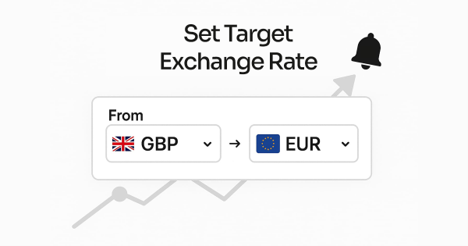
target exchange rate not reached

There are many options in forex for exchanging currency for your personal or business needs, and one such way is setting up a target rate. It appeals to most people because it cuts the time people spend watching the market in wait for the right time to exchange. A business owner paying a supplier next month would rather wait for a better rate than lock in today’s. Similarly, a homebuyer sending a deposit abroad wants to avoid feeling they paid more than they had to. A freelancer invoiced in dollars is happy to wait a week if it means more pounds in their account.

So, who doesn’t want good value for their money, and for many people with a flexible timeline, that’s an easy decision. But here’s a catch: what if that target exchange rate isn’t reached? That’s what we are going to explore in this blog. Our team speaks to customers in this situation regularly, so we’ll cover what happens to your order, what happens to your payment, and the options you have as your deadline approaches.

What’s a Target Exchange Rate?

Think of a target rate as the rate you ideally want for your next foreign currency exchange. You set it as an order with your provider, who monitors the market and converts your money only when your rate becomes available. Let’s see through an example: suppose you need to pay a European supplier €20,000 for your UK-based business, and you are continuously monitoring the GBP/EUR exchange rate. The current rate is 1.160, but you wish it to be a little higher, say 1.180, because at the higher rate, £1 buys more euros, so you need fewer pounds to cover the same payment. In pounds, that is about £17,241 at 1.1600 versus about £16,949 at 1.1800, a difference of roughly £292.

So, when the market reaches that pre-selected rate, your order is automatically executed at that rate, reducing the risk of uncertainty and market fluctuations. A target rate is an instruction, not a guarantee, so if the market never reaches it, the order won’t fill.

Why Can Your Target Exchange Rate Go Unreached?

In forex, rates continuously swing, and even with all the kinds of indicators that help you predict the movement, you can still never be completely sure about the rate or direction of market movement, because there are multiple economic factors creating a compounding effect on each other, producing rises and falls. Interest rate decisions, inflation data and political events are common examples. By the time your payment is due, or your transaction is planned, you never know what the circumstances will be and how the market will react to the news. So there’s always a chance that the target exchange rate is not reached. And this happens in many cases.

However, unpredictability or volatility is not the sole reason for that happening; there may be some other factors as well, such as an unrealistic target, a short window before your deadline, or an order that expires before the market gets there. Checking the recent highs and lows for your currency pair before choosing a target gives you a more realistic starting point.

When Your Target Exchange Rate Is Not Reached

What Happens to Your Order?

In most cases, not reaching the selected exchange rate doesn’t close your order. Usually, it stays active until it is filled, amended, cancelled or reaches the expiry date you set.

What Happens to Your Payment?

When your set target exchange rate is not reached, your money does not automatically convert or go ahead. This protects your payment from being converted at the unfavourable rate, but at the same time it puts pressure on you for the outstanding payment.

What to Do If the Deadline is Close?

If your set exchange rate is not reached and the deadline is close, you can still pay, but you will need to decide how to do it before the order expires. Here are some options you can choose from:

  • Switch to a market order to exchange at the current rate
  • Adjust your target rate to a more achievable target
  • Split the payment, convert part now and wait for a better rate on the rest.
  • Extend the deadline if the recipient is willing
  • Go for a forward contract to lock in the rate for the payment
target exchange rate

About Linea Global

At Linea Global, we help individuals and businesses move money between currencies, providing a seamless international transaction experience for years. We offer spot trades for when you need to convert today, forward contracts for future payments, rate alerts so you don’t have to watch the market all day and risk management to help you protect your funds.  If you are not sure which is the right solution, our team of FX experts is available 24/7 to help you understand which option suits your requirements.

Choose Linea Global for your next foreign exchange, and experience transparent pricing, competitive exchange rates and endless support.

DISCLAIMER: The figures used in this article are illustrative and may not reflect current exchange rates. This content is for general informational purposes only and does not constitute financial advice. Before making an FX decision, consider your payment deadlines, exchange rate movements, risk appetite and individual circumstances.

Frequently Asked Questions

A market order converts your money straight away at the current rate. A limit order waits until the market hits the rate you’ve chosen, so you get more control over the price but no guarantee it’ll ever happen.

In most cases, yes, you can change it as long as the order has not been filled. But must confirm it with the provider or platform you are using.

If your target exchange rate is not reached, you can place a new order or convert at the current market rate.

Leave a Reply

Your email address will not be published. Required fields are marked *